Custom computer-vision models
Evaluate, adapt or develop models for defined image classes or tasks, starting from proven methods where they fit.
Custom AI & geospatial solutions
When a standard workflow is not enough, Satvitech can scope tailored computer-vision models, automated processing pipelines, and specialist tools around the available data and the customer's objective.
Workflow
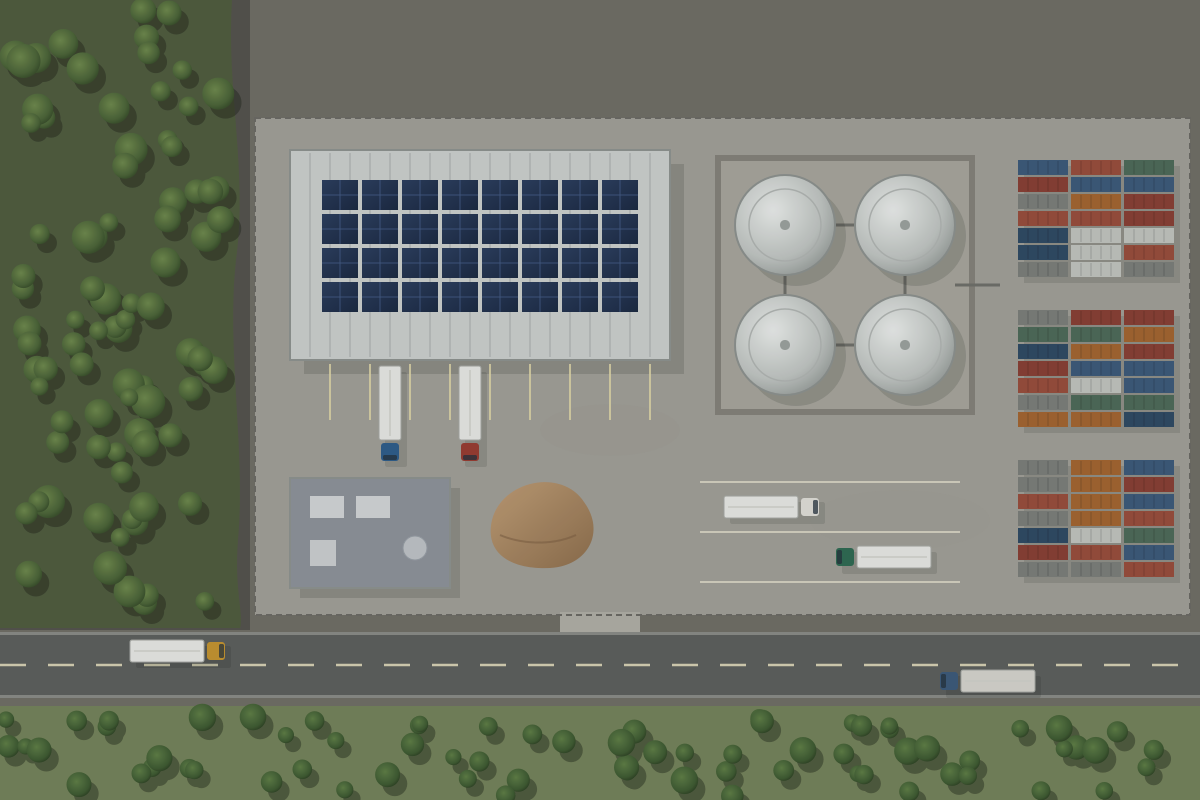
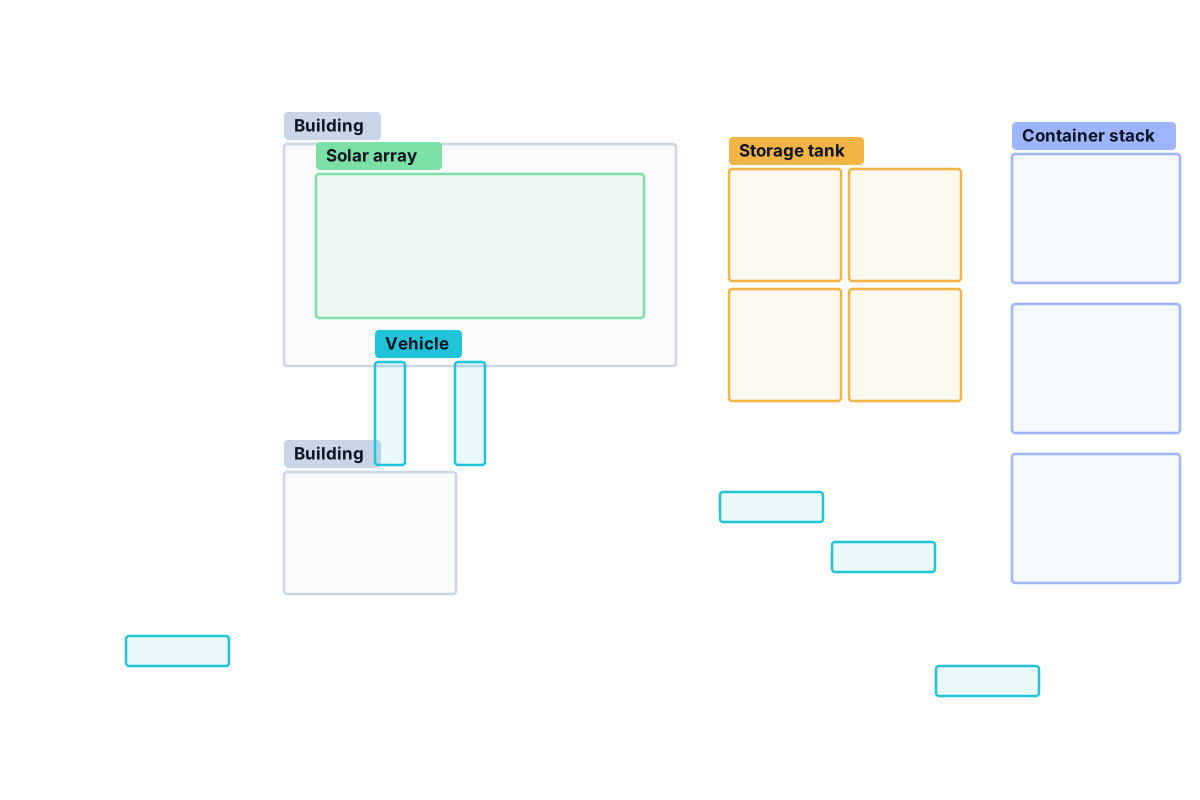 Illustrative interface
What can be developed
Every custom development relates directly to imagery, computer vision, image analytics or the geospatial workflows around them.
Evaluate, adapt or develop models for defined image classes or tasks, starting from proven methods where they fit.
Connect image ingestion, preprocessing, model inference, validation and output generation into one repeatable flow.
Organise repeat image-analysis tasks where the input data and its licensing allow.
Targeted review screens, dashboards or reports for a defined workflow — not general-purpose software.
Structure results for your existing workflow once the formats and integration requirements are known.
Test an approach against suitable reference examples, document limitations and improve it when the data supports it.
How custom projects begin
A proof of concept with agreed success criteria comes before any larger build, so you can see what works on your data first.
You describe the task and the decision or output you need.
We review sample data, permissions, quality and feasibility.
Together we agree a proof-of-concept scope and success criteria.
A suitable model or workflow is developed and tested on representative data.
Results and limitations are reviewed before production use or further development.
Modular by design
Custom workflows are built from clear stages, so each one can be tested, replaced or improved on its own. Outputs are shaped for the place they will be used — a report, a spreadsheet, a GIS layer or another system.
Flexible engagement
Scope and pricing depend on the imagery, requirements and delivery approach. We agree them with you once the task is understood.
Test whether the task is achievable with the available data before a larger commitment.
A scoped piece of work with agreed inputs, method and deliverables.
A repeatable pipeline or tool built for a specific, recurring task.
Continued improvement or recurring processing, where mutually agreed.
FAQ
No. Custom work is limited to AI, imagery, computer vision, image analytics and the geospatial workflows around them — for example a model, a processing pipeline or a review interface for analysis results.
It depends on the task. Some problems can use existing methods with little adaptation; others need labelled examples. We assess this during the feasibility stage and explain what would be needed.
It depends on the data, the complexity of the task and the agreed scope. We propose a timeline after reviewing sample data rather than quoting one in advance.
Related services
Custom solutions often extend one of our standard services to a new class, data source or output format.
Describe the task, the decision it supports and any sample imagery you have. We will suggest whether a proof of concept is the right first step.